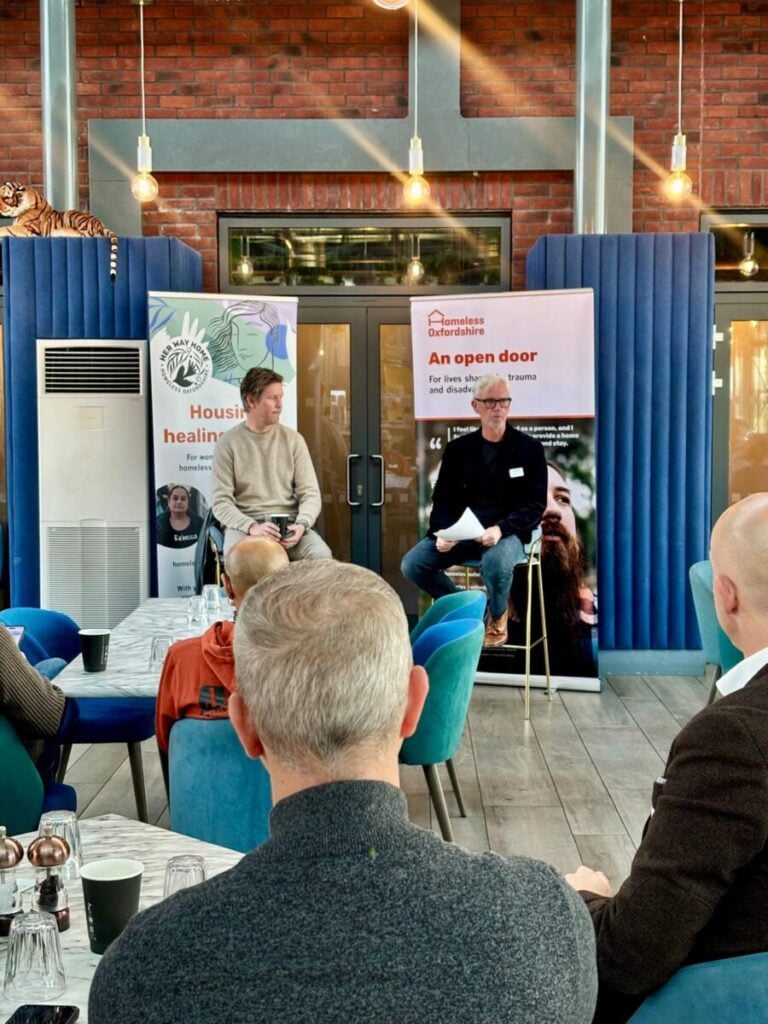
We were very grateful to psychotherapist Philippa Smethurst MSc for facilitating reflective practice for support workers at our Mawle Court project in Banbury recently. Here is what she observed during her time with us.
“As a psychotherapist of 30 years, I have become increasingly interested in trauma. What is trauma? It is a wound. One that we often hide from ourselves and others in order to survive and carry on. A wound is left when we have too much to bear. Our response to having too much to bear is often left inside us as a kind of charge of energy.
I have spent years sitting with trauma and trying to understand it. During the pandemic lockdown, we were separated from one another. Of course, we all experienced change and stress in different ways. For me at that time, it seemed a fitting time to study trauma responses, so I started writing and thinking. My book: 20 Ways to Break Free From Trauma is the result. It is to be published by Jessica Kingsley at the end of November 2024.
Working as a facilitator with Homeless Oxfordshire at Mawle Court for the past three months, I have noticed facets of trauma singing loud and clear. This is what I observed:
1. Residents experience overwhelming emotions as a result of having had too much to bear in their lives. As a result, they present in a variety of complex ways including mental health instability, suicidal presentation, physical illness, and threatening, changeable and florid behaviour.
2. It can be extremely challenging to meet the needs of individuals who are traumatised and present in such complex diverse, repetitive and yet unpredictable ways. I’ve become acutely aware of how organisations, structures and systems can groan under the weight of demand and the colossal pressure of needing to be flexible, responsive and caring in the face of enormous demand and lack of resources.
3. Support workers who pick up the trauma of others often feel powerless to help them and become overwhelmed themselves. The trauma charge is pushed into them! We need help to understand what can happen to us when we are around the trauma of others. And how our own traumas, past and present, can be touched and triggered. We can become charged too. We need help to regulate, to soothe ourselves and understand what has happened to us. We can find ways to discharge our trauma charge, to enable us to manage and continue on in this demanding work.
I wish all the best to all the residents and staff at Homeless Oxfordshire.”
Philippa Smethurst MSc UKCP reg BACP Snr Accred
Counsellor, Psychotherapist, Supervisor and Author